
-
By GAMAAL Team
- In Uncategorized

On your arrival in Brazil 🇧🇷
Picture this: You’ve just landed in the vibrant city of Salvador, Brazil, with an eager appetite and a curiosity for the unknown. The warm embrace of the tropical air greets you as you step off the plane, but there’s something on your mind that’s as important as the sights and sounds of this beautiful place.
You love to eat healthily, and you wonder: Will you be able to find delicious, nutritious food in Brazil that satisfies your taste buds and your health goals?
You are aware that numerous studies have linked diet to the development of chronic diseases such as heart disease, diabetes, and certain types of cancer. For example, a diet high in saturated fats and trans fats is associated with an increased risk of heart disease.
Finding the Delights
As you embark on your adventure through the heart of Bahia, the state that houses Salvador, you quickly discover that Brazil’s cuisine is a delightful blend of flavors, history, and culture. And, to your pleasant surprise, healthy options abound.
The bustling streets of Salvador beckon, and you set out to explore the local food scene, eager to savor the culinary treasures that this city has to offer. Your first stop is at a charming beach side restaurant where the aroma of grilled seafood fills the air.
You see a fresh, colorful seafood salad, bursting with vibrant vegetables, marinated shrimp, and a zesty citrus dressing. It’s a healthy start to your culinary journey, and you can’t help but appreciate the bountiful produce that Bahia provides. But you believe, there are still better cuisines you can start with.
Next, you venture deeper into the heart of the city, where the historic district of Pelourinho awaits. Cobblestone streets, colorful colonial buildings, and rhythmic beats from street musicians transport you to another time.
As you delve further into Salvador’s culinary landscape, with an acai bowl in your hand. The bowl brimming with the superfood acai berry, topped with fresh fruits, granola, and a drizzle of honey.
You realize how nutritious and energizing it is to roll with your day, and you find yourself craving it long after you return home. And then you realize that healthy eating is seamlessly woven into the fabric of Bahian cuisine.
Salvador’s rich culinary heritage is deeply rooted in Afro-Brazilian culture.
- African Influences: Salvador’s cuisine is heavily influenced by the African heritage of its people. Dishes like Acarajé (deep-fried black-eyed pea balls filled with shrimp), Moqueca (a rich seafood stew), and Vatapá (a spicy shrimp and coconut milk sauce) all have strong African roots.
- Street Food Culture: Salvador is famous for its street food culture. You can explore stalls and carts selling delicacies like Abará (similar to Acarajé but steamed), Cocada (coconut candy), and Queijo Coalho (grilled cheese on a stick) while soaking in the local atmosphere.
- Bahian Spices: The use of spices is essential in Bahian cooking. Dishes are known for their bold flavors, often incorporating ingredients like dende oil (palm oil), malagueta peppers, and cilantro. The combination of these spices creates a unique taste that’s a hallmark of Salvadoran cuisine.
- Capoeira and Food: Capoeira, a martial art that combines dance and music, is another integral part of Salvador’s culture. Many Capoeira schools have their traditions of cooking and sharing meals, fostering a sense of community and camaraderie.
- Lavagem Festivals: Lavagem festivals are unique events where streets and churches are washed with water, flowers, and perfume as part of a spiritual cleansing ritual. These celebrations often include feasts with traditional dishes, adding another layer of cultural significance to the food.
- Music and Dance: Salvador is also famous for its music and dance forms like Samba, Axé, and Forró. These cultural expressions often go hand in hand with food, creating a holistic experience of Salvador’s cultural richness.
- Food Markets: Don’t miss the local food markets like Mercado Modelo and São Joaquim Market. These bustling places offer a diverse range of fresh produce, spices, and local dishes, providing an immersive experience into Salvador’s food culture.
You find yourself at the São Joaquim Market. You see Moqueca, a seafood fish stew and you couldn’t resist the aroma but you are skeptical if it’s healthy.
One of The Traditional Brazil Cuisines With Health Benefits.
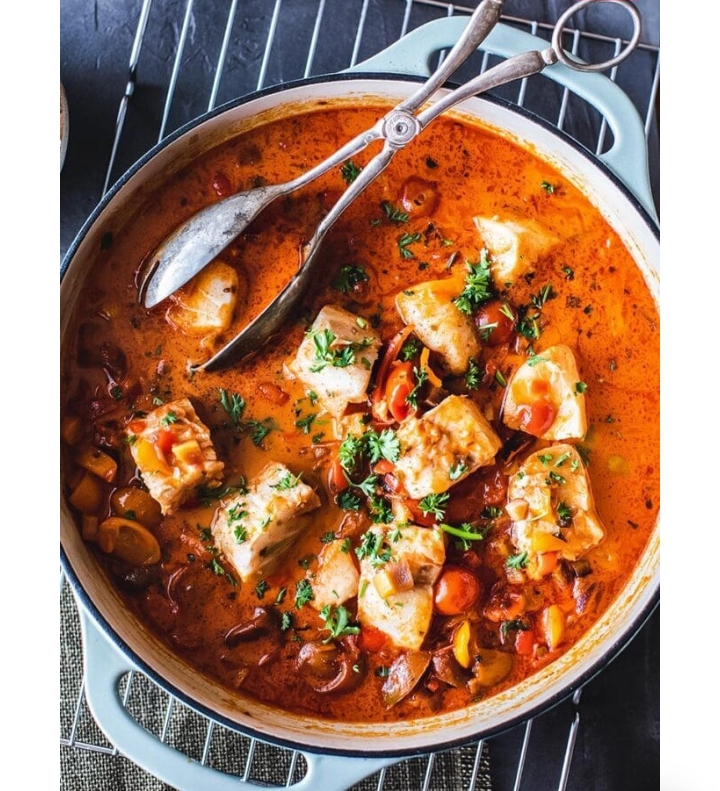
You finally settle for Moqueca. You are not only going to be savoring a delicious fish stew but you will be eating healthy.
Moqueca is a Brazilian Fish stew with coconut milk, tomatoes and peppers. It’s traditionally served over rice with lime and cilantro.
Ingredients in Moqueca are:
- White fish- Halibut, Black Cod, Sea Bass , Cod, escolar, etc. (thicker cuts are best)
- Dende – Brazillian Red Palm oil ( or coconut oil)
- Onion
- Carrots
- Red bell pepper
- Garlic
- Chili peppers
- Spices
- Fish or chicken stock
- Tomatoes
- Coconut milk ( liquid and solids)
- Lime
When you savor Moqueca, apart from the health benefits you will gain from some of its ingredients like Cilantro, garlic, carrot, tomatoes, onions, red oil but with the coconut milk.
Coconut milk offers several potential health benefits:
Nutrient-rich: Coconut milk contains vitamins C, E, B vitamins, and minerals like iron, magnesium, and phosphorus.
Heart health: It may improve heart health by raising HDL (good) cholesterol due to its healthy fat content.
Weight management: The medium-chain triglycerides (MCTs) in coconut milk may aid in weight management by increasing satiety and boosting metabolism.
Bone health: It contains phosphorus and calcium, which are essential for maintaining strong bones.
Immune support: Lauric acid in coconut milk has antimicrobial properties that could help support the immune system.
Skin and hair: The fats and vitamins in coconut milk can promote healthy skin and hair.
However, it’s important to consume coconut milk in moderation as it’s calorie-dense. Opt for unsweetened versions to avoid added sugars. If you have dietary restrictions or concerns, consult a healthcare professional before making it a regular part of your diet.
So, as you savor the last spoonful of your Moqueca on your final day in Salvador, you reflect on your culinary adventure. In this captivating city, you’ve not only explored the rich history and culture of Brazil but also found that, yes, you can eat healthily and deliciously in this enchanting corner of the world. Salvador has left an indelible mark on your taste buds and your heart, and you depart with a newfound appreciation for the adventure of Brazil’s cuisines and her cultural heritage.
We hope you enjoy the adventure, drop your comment let’s hear what you feel about Brazil cuisine.